Property in Guardamar del Segura: a forest on the dunes and a six-storey limit
A pine forest an engineer planted on the dunes to stop them burying the town. Two-thirds of residents are Spanish and nothing is built above six storeys. We list 82 properties in Guardamar del Segura, at a median of €279 250 — about €3 250 per square metre.
Guardamar del Segura looks the way it does because of a piece of late-19th-century engineering. Shifting dunes were moving inland from the sea and threatened to bury the town outright, so in 1897 the forestry engineer Francisco Mira set about pinning them down: some 600,000 pines, plus palms and eucalyptus, across 800 hectares behind the coastline. The forest is still there, and it still separates almost every beach from the built-up area.
That is also where the difference from its neighbours comes from — low, green and shaded, where the Costa Blanca is usually open and white. The local building ordinance caps almost the whole town at six storeys, or 20 metres. Torrevieja's towers start thirteen kilometres to the south.
These figures describe our own listings, not the whole local market — our selection carries more new builds than the area average. Medians are calculated from sale listings and refresh nightly.
What the place is actually like
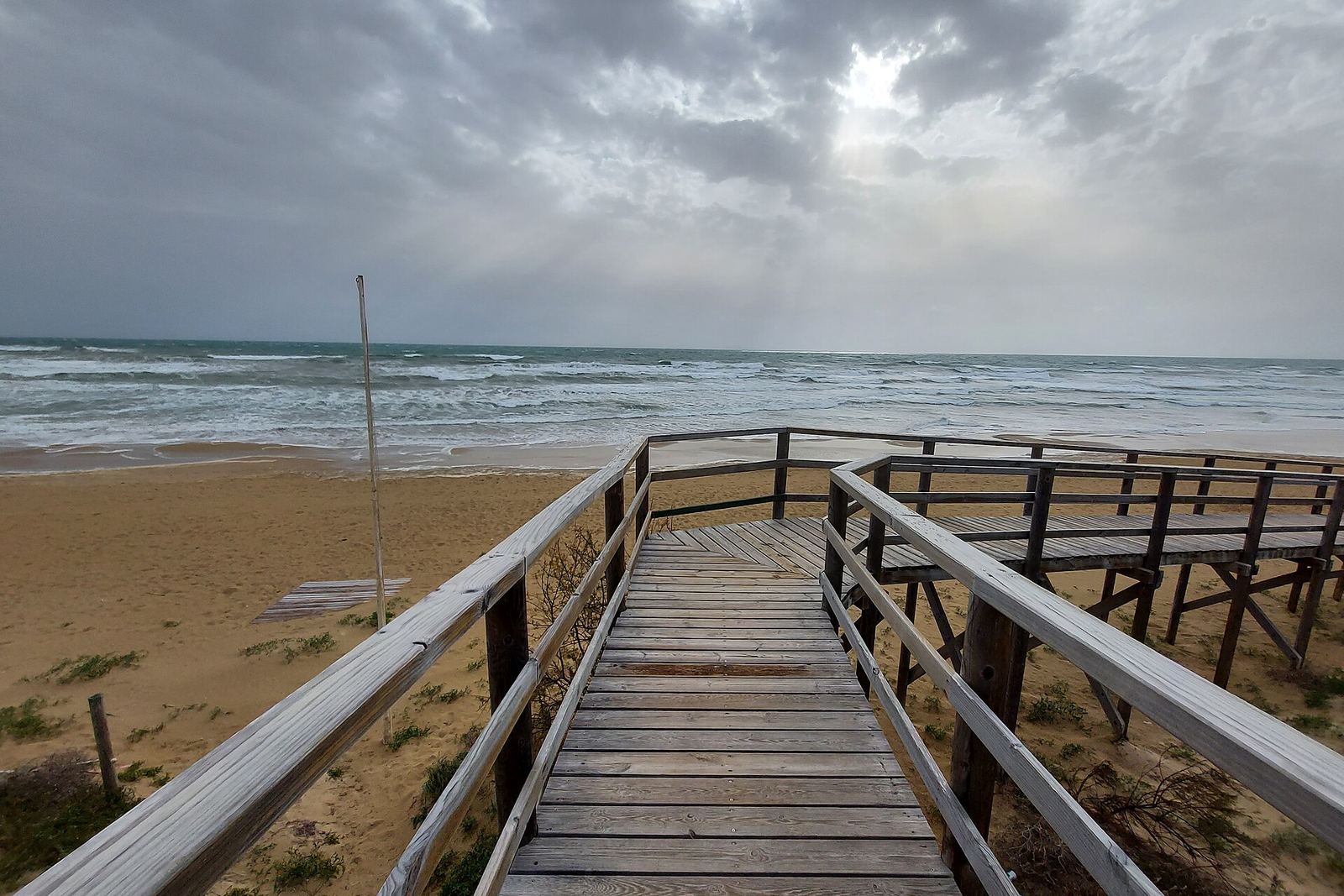
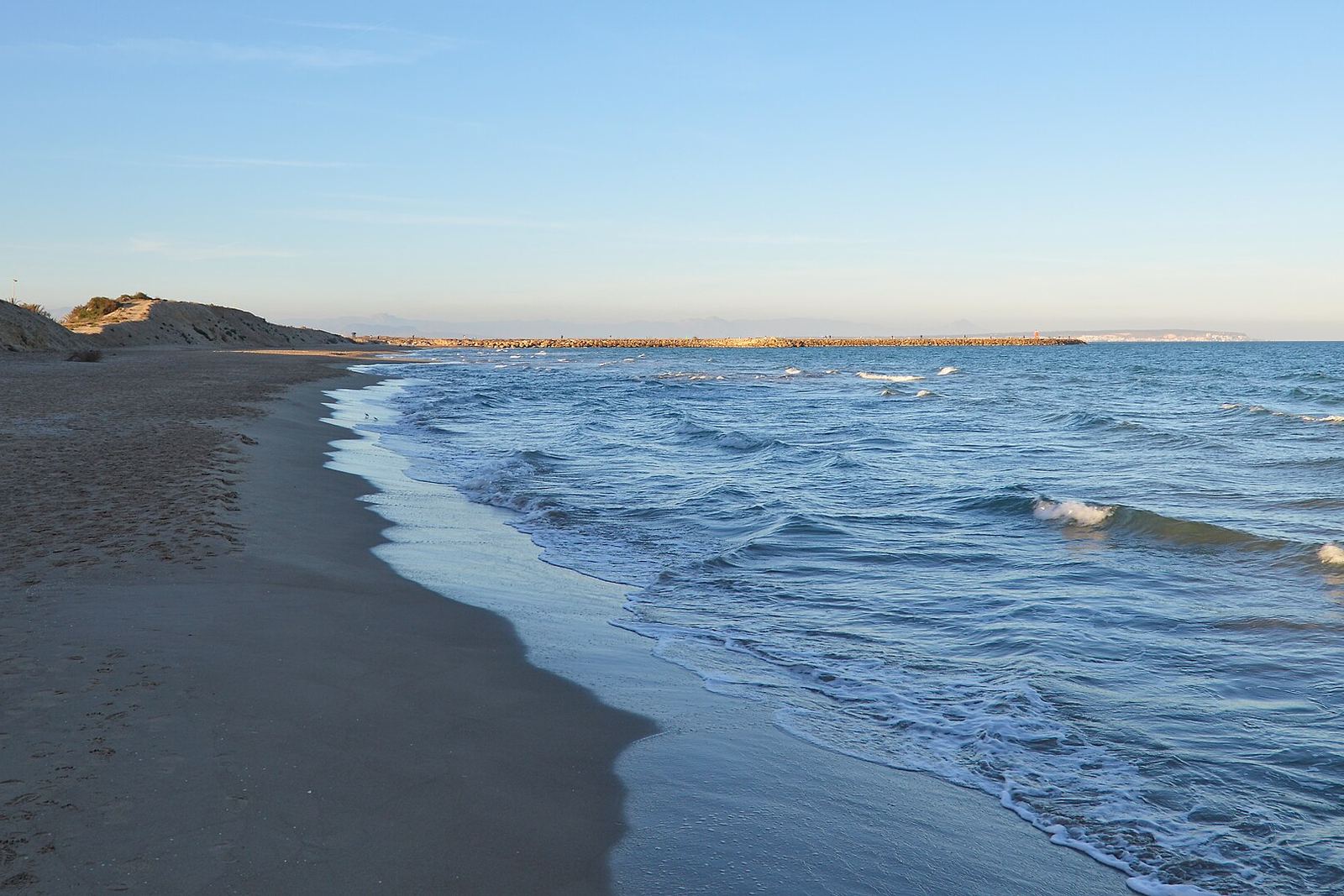
The town sits at the mouth of the Segura, roughly midway between Alicante and Torrevieja. The land is flat — the centre is about 25 metres above sea level — and those 800 hectares of stabilised dune and pine forest run behind the whole coastline. The river cuts the roughly 11 kilometres of beach in two: north of it are Els Tossals (locally El Rebollo, a nudist beach), Vivers and Babilonia; south of it Centre, La Roqueta, Moncaio, Camp and Ortigues, the last of which ends at the Torrevieja boundary.
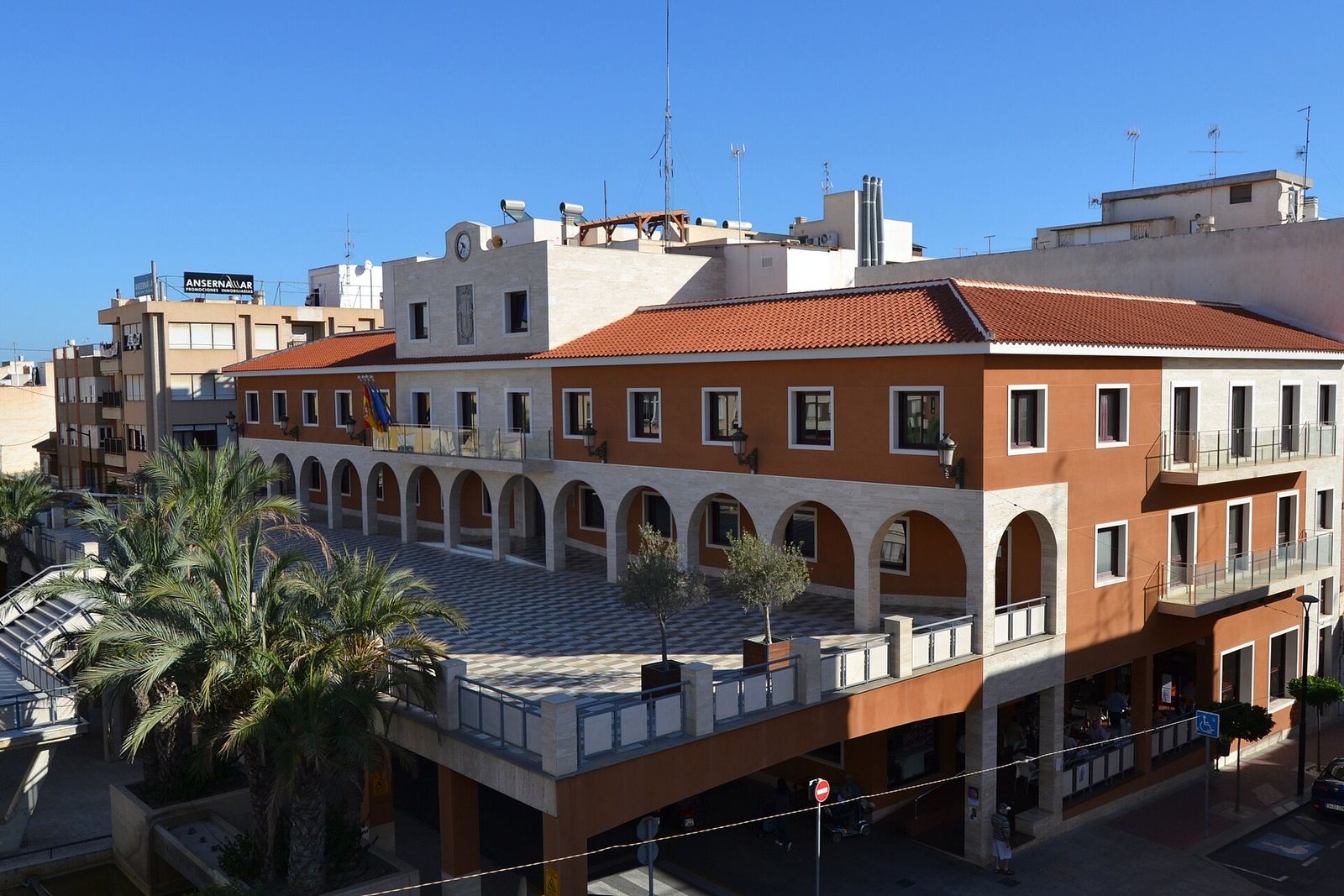
The old town is not a warren of narrow lanes. The 1829 earthquake destroyed the medieval core, and the town was rebuilt on a neoclassical grid: low, quake-resistant houses around symmetrical squares, with the ruined castle on the hill above them. Building low became a habit and is now written down — six storeys and 20 metres almost everywhere, less than that in parts of the historic centre.
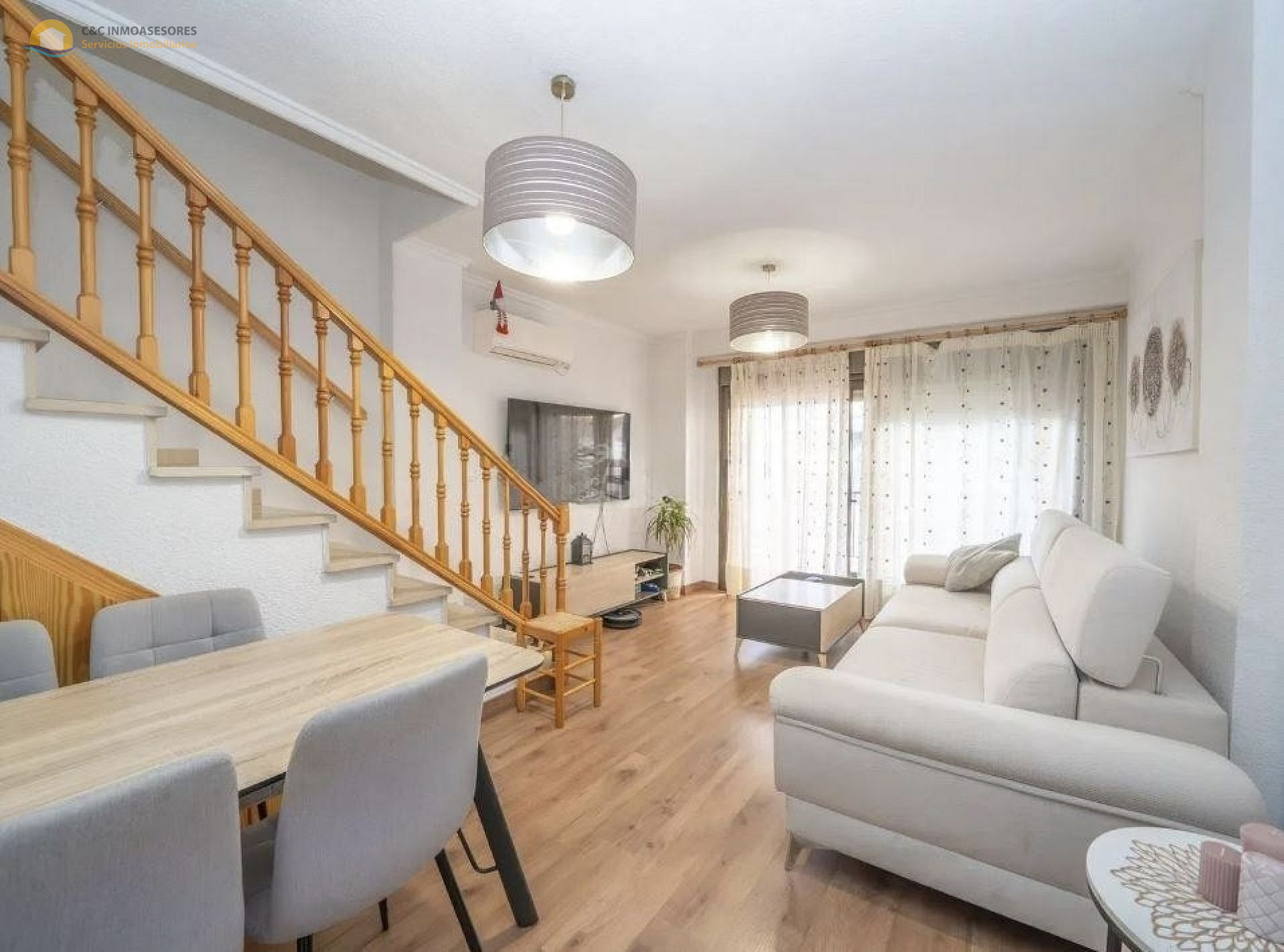
The seafront promenade is short, well under a kilometre. Marina de las Dunas on the right bank of the river — 498 berths, 116 of them for visitors, open since 1999 — is a working sailing harbour rather than a glossy resort marina. Housing splits broadly in two: low apartment blocks and duplexes in the centre and in Las Viñas, the cheapest part of town, and houses on their own plots in the outlying urbanisations, where prices are highest. The best known of those among foreign buyers is El Raso, next to the Lagunas de la Mata nature park — villas and gated developments with communal pools.
The population was about 18,500 in 2025, against roughly 15,600 ten years earlier — growth, not stagnation. The most detailed population-register breakdown available dates from 2021–22 and shows that about two-thirds of residents hold Spanish nationality. The largest foreign community is British, at 7–8% of the population, followed by smaller Russian, Ukrainian, Moroccan, Bulgarian, Romanian and Dutch ones.
The comparison that tells you most is with the neighbour. Torrevieja has over 110,000 residents, and foreign nationals passed half the population there by 2023–24; it has largely run out of land and is now planning high-rise towers. Guardamar is six times smaller, two-thirds Spanish, and capped in height. Neither is better than the other, and they are not independent of each other: Guardamar's referral hospital is in Torrevieja, and that is also where people go out. The difference is what is left in November — Guardamar's shops and services do not close for the winter, because their customers live here all year.
Two things mostly change hands: apartments and duplexes in the centre and in Las Viñas, and houses on their own plots in the outlying urbanisations, consistently the most expensive stock in the municipality. The price per square metre depends on whose index you read. RealAdvisor puts the median at about €2,300/m² in July 2026 (apartments €2,306, houses €2,118); Idealista reaches about €2,790/m² by April. Both point the same way and steeply: around 18% in a year, and on RealAdvisor's numbers roughly 87% over five years. Fotocasa's figure for the same month (about €3,780) sits so far above the others that it is not used here.
Short-term letting runs under the Valencian region's tourist-accommodation (VUT) rules, tightened in August 2024: without a municipal report, a five-year registry number and — for activity started from 2025 — the owners' community's approval, you cannot start letting.
The forest that holds the town down
Mira's project began in 1897 and the planting from 1900. The work ran for decades and is still in the town's calendar: on 31 January it holds Fiesta del Árbol, a tree-planting day descended directly from that project, with local schoolchildren taking part.
The forest is not fixed, though, and it is fair to say so. A regional survey in 2019 found 27% of the original pines dead and 51% in serious decline. The answer is a €1.3 million plan that replaces part of the pinewood with drought-tolerant low vegetation — meaning some of the forest people come here for will look different in ten years. The beach is moving too: in 2026 the town installed €82,728 worth of wave and current sensors and set aside €241,300 to stabilise the castle-hill slope.
Who Guardamar suits
Retirees
The centre is flat and walkable, the town has its own health centre (C.S.I. Guardamar), and Torrevieja's university hospital is 13 km away. Because two-thirds of residents live here all year, shops and services do not shut for the winter.
Buy-to-let investors
International visitor numbers rose 29.2% in 2025 to a record, led by British visitors. The Valencian region has a defined VUT licensing route, and urbanisations like El Raso sit within reach of both the beach and La Marquesa golf course.
Families with children
Around 11 km of beach, several of them Blue Flag, pine forest immediately behind and kayaking on the Segura. The town has three state infant-and-primary schools and the IES Les Dunes secondary; the British-curriculum school is in Rojales, 15–20 minutes away.
Ask before you come to look
Message us if you want to know the real difference between a flat in the centre and a villa in El Raso, or what a VUT licence would mean in practice for your plans.
32 km, about 30 minutes by car on the N-332 (some tourism pages round this down to 25 km)
Murcia (Corvera) airport
about 73 km, roughly an hour by car
Alicante city
38 km, about 40 minutes by car; the Costa Azul bus from the central bus station also takes around 40 minutes
Rail and roads
no railway station in town; the nearest line is Alicante–Murcia, reached via Alicante or Elche. The road is the N-332; the AP-7/A-7 motorway is reached by connecting roads
Healthcare
the C.S.I. Guardamar health centre, Calle Molivent 1; the referral hospital is Hospital Universitario de Torrevieja, 13 km / 17 minutes; private care at Quirónsalud Torrevieja, a similar distance
Schools
CEIP Reyes Católicos, CEIP Molivent and CEIP Dama de Guardamar, plus the IES Les Dunes secondary; the international option, Willow International Academy, is in Rojales, 15–20 minutes away
Beaches
about 11 km, split by the river mouth into a northern and a southern stretch; several fly the Blue Flag, among them Centre, La Roqueta and Moncaio
Market days
Wednesdays 8am–2pm at the La Redonda car park; on Sundays the larger Campo de Guardamar market, around 500 stalls
Marina
Marina de las Dunas at the mouth of the Segura, 498 berths (116 for visitors), with sailing, windsurfing and diving courses through the summer
Golf
La Marquesa Golf & Country Club in Rojales, 18 holes on flat ground, about 5 km / a quarter of an hour away
Property in Guardamar del Segura
Everything currently available in our feed. The list refreshes nightly.
Alicante airport is about 32 km and 30 minutes away on the N-332; some tourism pages round that down to 25 km. Murcia's Corvera airport is roughly 73 km. There is no railway station in the town. The Costa Azul bus reaches Alicante from the central bus station in around 40 minutes. There is no direct flight from Tallinn — you connect.
Is the town alive in winter?
More alive than most Costa Blanca resorts, because around two-thirds of residents are Spanish and live here permanently — shops and services do not close for the winter. That said, restaurant and beach-bar hours contract, and the crowds thin quickly once the Moros y Cristianos fiestas end in late July.
Can you buy a high-rise sea-view apartment here?
Essentially not. The town's ordinance caps most buildings at six storeys and 20 metres, and lower in parts of the historic centre. Only public buildings can justify going higher, and even then the storey limit still applies. This is not a temporary restriction but a long-standing local rule.
What do you need in order to let a flat short-term?
The flat has to be registered as a Valencian tourist dwelling (VUT) — a whole property let for up to 10 continuous days per guest. Since August 2024 you need a municipal urban-compatibility report and a five-year registry number, displayed both in the advert and at the property. New activity must be approved by the owners' community, and bookings through the portals need an NRU number.
Where is the nearest hospital?
For day-to-day care the town has its own health centre, C.S.I. Guardamar on Calle Molivent: family medicine, paediatrics, dentistry, minor surgery, physiotherapy and a continuous-care point. The referral hospital is Torrevieja's university hospital, 13 km or 17 minutes away, with private care at Quirónsalud Torrevieja a similar distance. There is no hospital in Guardamar itself.
What are the beaches like?
There are around 11 km of beach in total, split by the river mouth into a northern and a southern stretch. Several fly the Blue Flag, among them Centre, La Roqueta and Moncaio; the exact list varies between sources and by season. Local reporting says La Roqueta has flown it for over 16 years without a break. Els Tossals at the far north is a nudist beach.
Do you need a car here?
Not in the centre: shops, the market, the health centre and the bus station are all within walking distance and the ground is flat. Outside the centre — in El Raso, say — in practice yes. There is no large shopping centre in town, and the golf course, the international school and the hospital are all in neighbouring municipalities.