Property in San Pedro del Pinatar — a fishing town at the top of the Mar Menor
Top of the Mar Menor, on the Murcia side: salt-pan park, free mud baths at Lo Pagán and a long shoreline. Prices, VV letting rules and practical facts. We list 104 properties in San Pedro del Pinatar, at a median of €246 950 — about €3 320 per square metre.
San Pedro del Pinatar sits at the northern tip of the Mar Menor, Europe's largest saltwater lagoon, right on the border between Murcia and the province of Alicante. The Costa Cálida starts here: its neighbour to the north, Pilar de la Horadada, is already in the Valencian Community and under a different set of laws. The municipality is small — 22.32 km² — and squeezed between two seas: the shallow, warm lagoon to the south, the open Mediterranean to the east.
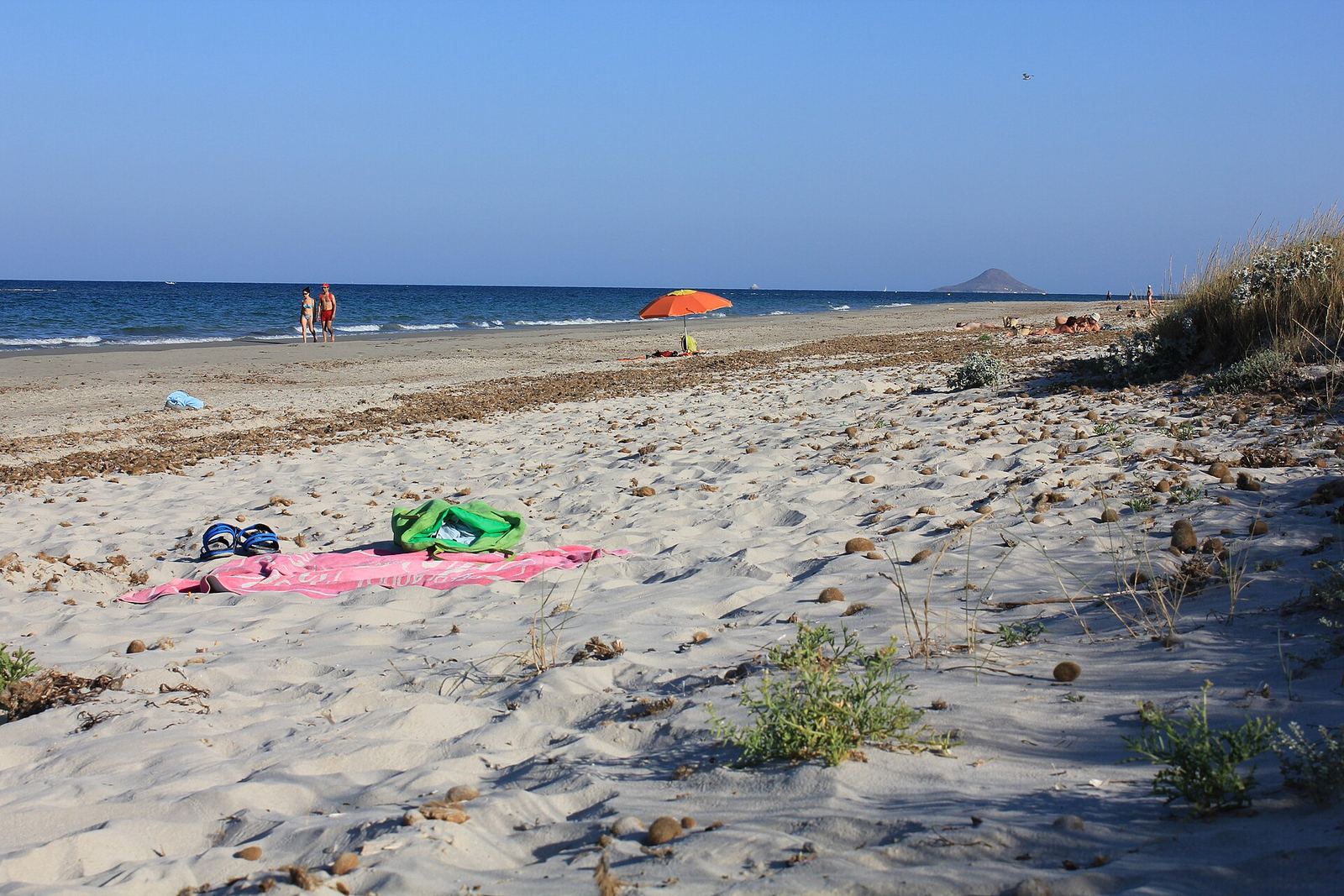
Close to a third of the municipality is the Salinas y Arenales regional park: 856 hectares of working salt pans, dunes and wetland, protected since 1992 and on the Ramsar list since 1994. That park is what keeps most of the town's Mediterranean shoreline unbuilt. The lagoon side gives the town a second, far calmer coast: shallow warm water, sandy beaches and a long promenade.
These figures describe our own listings, not the whole local market — our selection carries more new builds than the area average. Medians are calculated from sale listings and refresh nightly.
What the place is actually like
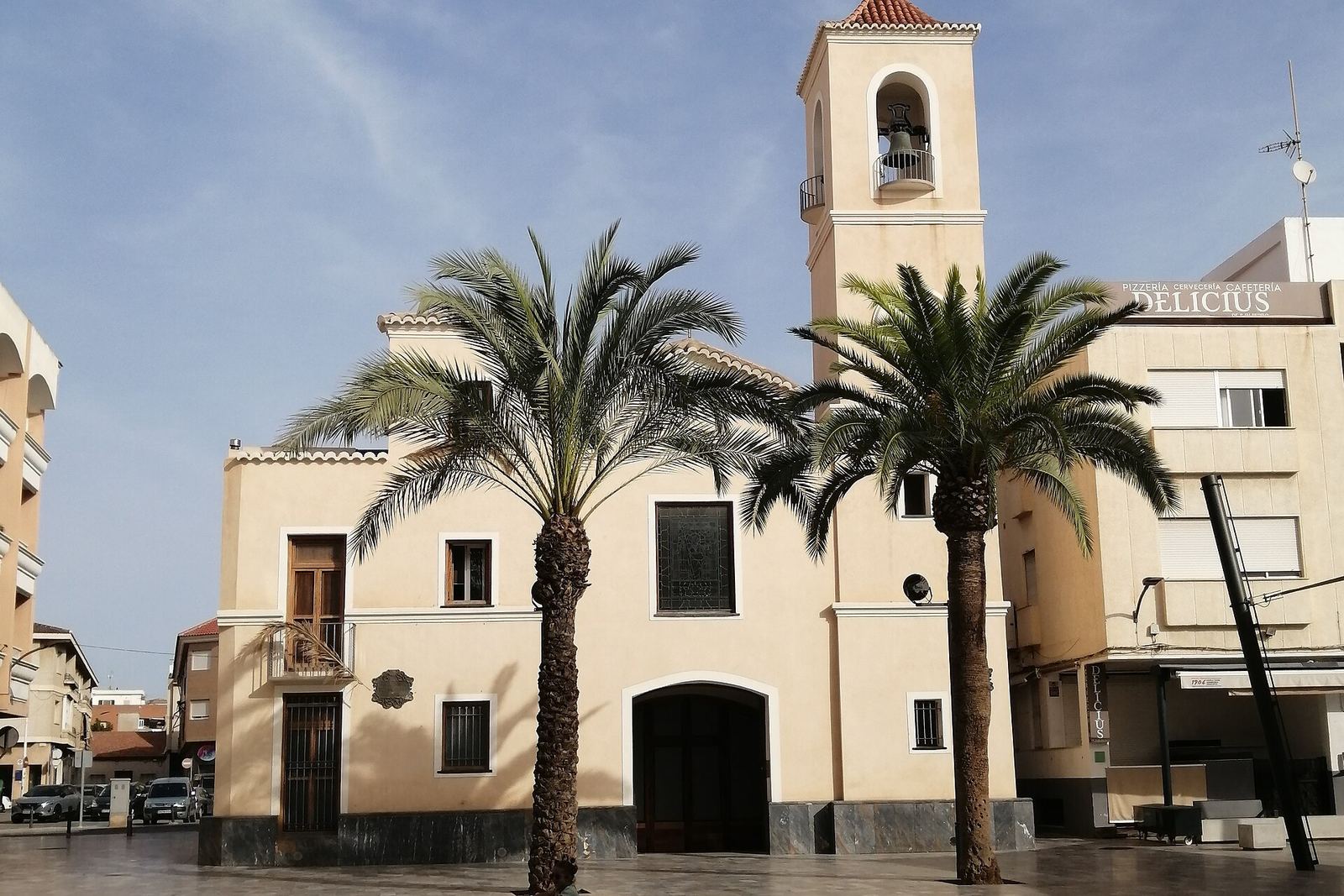
San Pedro was a town of fishermen and salt producers before it was a resort, and it still reads that way. The centre around the town hall and the church of San Pedro Apóstol is an ordinary Spanish commercial core with over 10,000 residents; on Mondays, roughly 8am to 2pm, the mercadillo fills Avenida del Pilar and the streets around it.
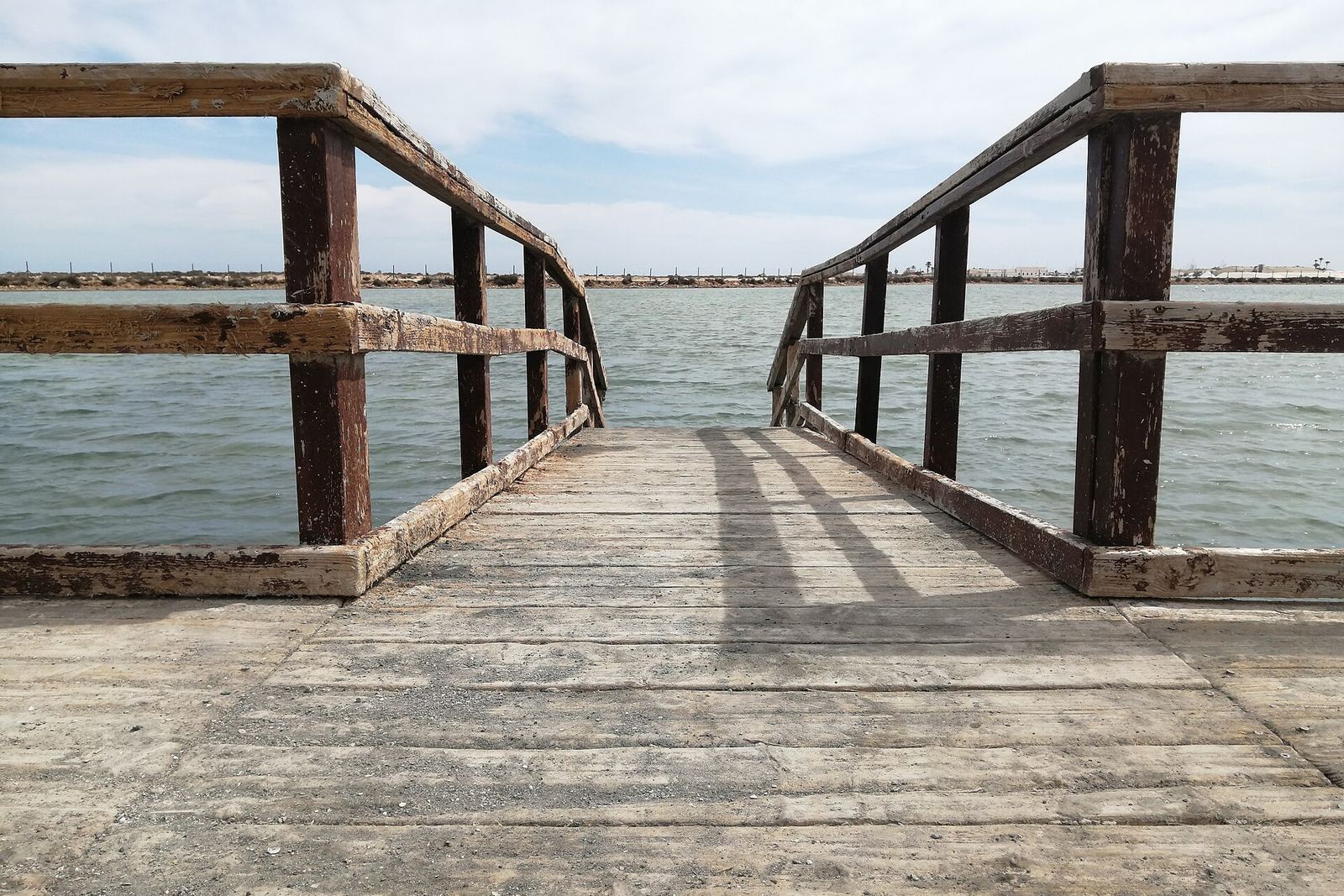
Three kilometres away on the lagoon shore is Lo Pagán, the tourist-facing half. Chiringuitos and restaurants line the promenade, wooden boardwalks lead out to the free mud pools at Las Charcas, and the fishing port runs a lonja — a fish auction — that gives free guided visits Monday to Friday.
The Mediterranean side looks nothing like it. Because most of that shoreline falls inside the park, there is no wall of high-rises of the sort you get in Torrevieja or La Manga: La Llana, Torre Derribada and El Mojón end in dunes and salt pans rather than a promenade. Behind Torre Derribada stand the park's tallest dunes, over three metres, and all three beaches held Blue Flag status in 2025. Right beside La Llana is the Puerto de San Pedro with two marinas, the larger of which, Marina de las Salinas, takes 254 boats.
The 2025 padrón counts 29,726 residents; in 2011 there were fewer than 24,000. The mix is not what people expect from a Costa Blanca resort: at the 2021 census roughly a quarter of residents were foreign-born, but the largest group was Moroccan (close to half of the foreign-born population), then Romanian (about 15%), with Ecuadorians, British and Ukrainians each around 6–7%. That is the face of the area's farming and service economy, not of British retirement.
There are British and other Northern European residents, concentrated around Lo Pagán and Villananitos, but they are not the dominant group here the way they are in Torrevieja. Spanish is the everyday working language and English-language service is thinner than further south; the flip side is that the town does not shut down for winter.
What sells here is mostly two- and three-bedroom apartments, concentrated in Lo Pagán, Villananitos and Los Cuarteros. A square metre of flat costs more than a square metre of house — Idealista's August 2025 breakdown gave €2,272/m² for flats and €1,948/m² for houses. New build directly on the Mediterranean beach barely exists, because that shoreline sits inside the park.
On price levels it is worth being honest: the portals' asking-price indices disagree. By mid-2026 Trovimap showed €3,123/m², Fotocasa €3,205/m² and Hogaria, for the same month, €2,231/m². The direction is agreed on — Idealista measured a 34% year-on-year rise by August 2025. More reliable than any absolute figure is a comparison inside one measure: in February 2025, per Idealista, a square metre across the border in Pilar de la Horadada cost roughly 60% more than here.
Short-term letting follows Murcia's own rules. Under Decreto 256/2019 the home is registered as a tourist dwelling (VV): a responsible declaration goes to the regional tourism institute, the property is entered in the register of tourism businesses and issued a number that must appear in every listing. Since 2 January 2025 you also need either full community-of-owners consent or the approval of at least three-fifths of the owners.
The Mar Menor: Europe's largest saltwater lagoon
The Mar Menor is Europe's largest saltwater lagoon, and San Pedro del Pinatar sits at the top of it. The narrow La Manga strip separates it from the open sea, which is why the water is shallow, warm and calm: there is next to no swell, and shallow water warms up faster in spring than the open Mediterranean.
For families with small children this is the easiest stretch of coast around. The beaches at Villananitos and La Puntica are sandy and shelve gently — you can wade a long way out without losing your footing — and what is behind them is a promenade with cafés and playgrounds rather than a road. That same calm water makes the lagoon a good place to start sailing or windsurfing: mistakes cost less here than they do offshore. Lo Pagán has its own Club Náutico on the lagoon, and on the Mediterranean side Marina de las Salinas runs sailing and diving schools.
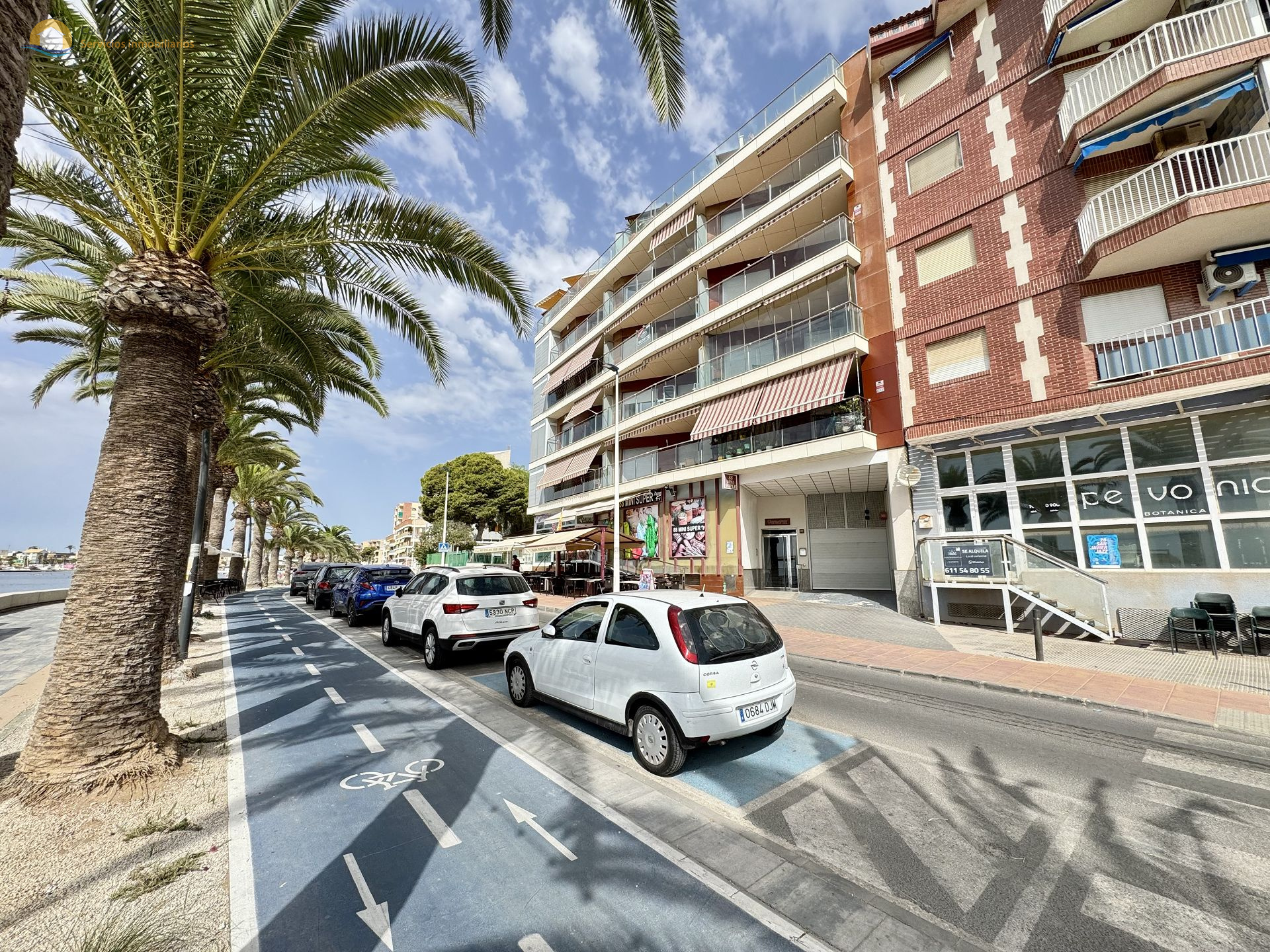
The municipality's lagoon shoreline is long and walkable end to end: La Puntica and Villananitos run into one another, and the promenade carries on out to the fishing port at Lo Pagán. In summer a ferry crosses the lagoon from there to La Manga. The salt pans and the park's boardwalks start right beside it, so a beach day and an afternoon of birdwatching begin from the same place.
Who San Pedro del Pinatar suits
Retirees
The whole town is flat and walkable; the health centre is here on Avenida de las Salinas and the area hospital, Los Arcos del Mar Menor in San Javier, is 15–20 minutes away. A large year-round population keeps the shops and the market open in January too.
Holiday-let owners
Free mud baths and two separate coastlines drive strong summer demand without an owner having to compete with an avalanche of tower-block flats. Budget for Murcia's own VV registration (Decreto 256/2019) and, since 2025, the required community-of-owners consent — check it before you buy.
Families
The lagoon beaches at Villananitos and La Puntica are shallow, warm, gently shelving and promenade-backed. It is flat enough to cycle between the historic centre and Lo Pagán, and the park's boardwalks and bird hides are a free day out.
Get a local read before you decide
We speak Estonian and we go there in person. If you are weighing San Pedro del Pinatar against Pilar de la Horadada or Los Alcázares, we can talk the differences through — including the two separate letting regimes.
Murcia Corvera (RMU) about 37 km, 30–40 min; Alicante-Elche (ALC) about 63 km, 55–60 min
Nearest city
Cartagena, 35 km, about 25 minutes
Health centre
Centro de Salud, Avenida de las Salinas 50, in the town itself
Nearest hospital
Hospital Los Arcos del Mar Menor, San Javier, 15–20 minutes; serves four municipalities
Beaches
Eight beaches on two coasts; 2025 Blue Flags at El Mojón, La Llana (Las Salinas) and Torre Derribada
Market day
Monday, roughly 8am–2pm, Avenida del Pilar and the streets around it
Marinas
Marina de las Salinas (254 berths, vessels up to 30 m, sailing and diving schools) and Club Náutico Villa de San Pedro on the Mediterranean side; a Club Náutico and the fishing port with its lonja at Lo Pagán
Golf
La Torre Golf Resort (18 holes, par 68), Roda Golf and Club de Golf Torre Pacheco, about 15 km / 20 minutes
Schools
No international school in the municipality; the nearest is King's College in Torre Pacheco, 20–25 minutes
Roads and public transport
AP-7 (junctions 774–777) and the N-332; regional Movibus lines, no railway station; a seasonal ferry from Lo Pagán to La Manga
Property in San Pedro del Pinatar
Everything currently available in our feed. The list refreshes nightly.
What is there to do in the Salinas y Arenales park?
The park covers close to a third of the municipality: 856 hectares of working salt pans, dunes and wetland, protected since 1992 and on the Ramsar list since 1994. There is no entry fee. Boardwalks and paths run between the salt pans, out to the bird hides and round behind Torre Derribada, where the park's tallest dunes stand over three metres; the Las Charcas mud pools are inside the park too. For a buyer it also matters that the park keeps most of the municipality's Mediterranean shoreline unbuilt.
Can I let a home here short-term?
Yes, but it has to be registered as a tourist dwelling (VV) under Murcia's Decreto 256/2019: a responsible declaration to the regional tourism institute, an entry in the register of tourism businesses, and a number that must appear in every listing. Since January 2025 you also need full community-of-owners consent or the approval of at least three-fifths of owners — check that before buying into an apartment block.
Does a Murcia letting licence work in Torrevieja or Pilar de la Horadada?
No. Pilar de la Horadada and Torrevieja are in the Valencian Community, which runs a separate VT system with its own registry and a red plaque bearing a white key that must be displayed. A Murcia VV registration has no standing there, and vice versa. If you are comparing towns either side of the border, treat them as two legal systems and budget time for both.
Is the town empty in winter?
Quiet, but not empty. The municipality has 29,726 year-round residents and the centre around the town hall is an ordinary Spanish town rather than a seasonal resort: the fish market, the Monday mercadillo and a meaningful share of the restaurants run all twelve months. The tourist half at Lo Pagán does get markedly quieter.
What are Las Charcas, and are the mud baths free?
They are open-air mud pools inside the regional park, next to La Mota beach near Lo Pagán. Grey, mineral-rich mud taken from the floor of the pool is spread on the skin, left to dry in the sun and rinsed off in the adjoining saltwater pond. There is no entry fee — it is described as the largest free medicinal mud-bath site in Europe — and it gets very busy in summer.
How far is the airport, and is there a direct flight from Tallinn?
There is no direct flight from Tallinn to either airport, so count on a connection. Murcia Corvera (RMU) is about 37 km and 30–40 minutes by car; Alicante-Elche (ALC), with far more routes, is about 63 km and 55–60 minutes on the AP-7 toll motorway.