Costa Blanca · the southern edge of Alicante province
Property in Pilar de la Horadada: an inland town and two coastal settlements
One municipality, two halves: a farming town inland, the coast at Torre de la Horadada and Mil Palmeras. The last town before Murcia, and why that matters. We list 96 properties in Pilar de la Horadada, at a median of €355 000 — about €4 270 per square metre.
Pilar de la Horadada is two quite different places under one municipal name. The administrative centre sits inland, 3–6 km from the sea: an everyday farming town with a Friday market, ordinary Spanish shops and a health centre, and almost nothing built for tourists. The coast only starts at Torre de la Horadada and Mil Palmeras, where nearly every foreign buyer ends up. When comparing listings, the first thing to check is which of the two an address is in.
The second thing worth knowing shows up in money. This is the southernmost municipality of Alicante province and of the whole Valencian Community, with the Región de Murcia border a kilometre to the south. All of it, both coastal settlements included, is on the Valencian side: Valencian transfer tax, Valencian holiday-let rules, the Valencian health service. A few kilometres south, all three work differently.
These figures describe our own listings, not the whole local market — our selection carries more new builds than the area average. Medians are calculated from sale listings and refresh nightly.
What the place is actually like
The municipality covers 78 km², running from low hills near the Sierra de Escalona down to a little over four kilometres of coastline. The land in between is greenhouses and flower fields — the town hall itself manages irrigation across roughly 60 km². This is still a farming municipality that happens to have six Blue Flag beaches, not a resort with a few fields left over. That is what keeps the place going all year: the Friday market and the ordinary shops in the inland centre run on a local economy based on agriculture rather than tourism.
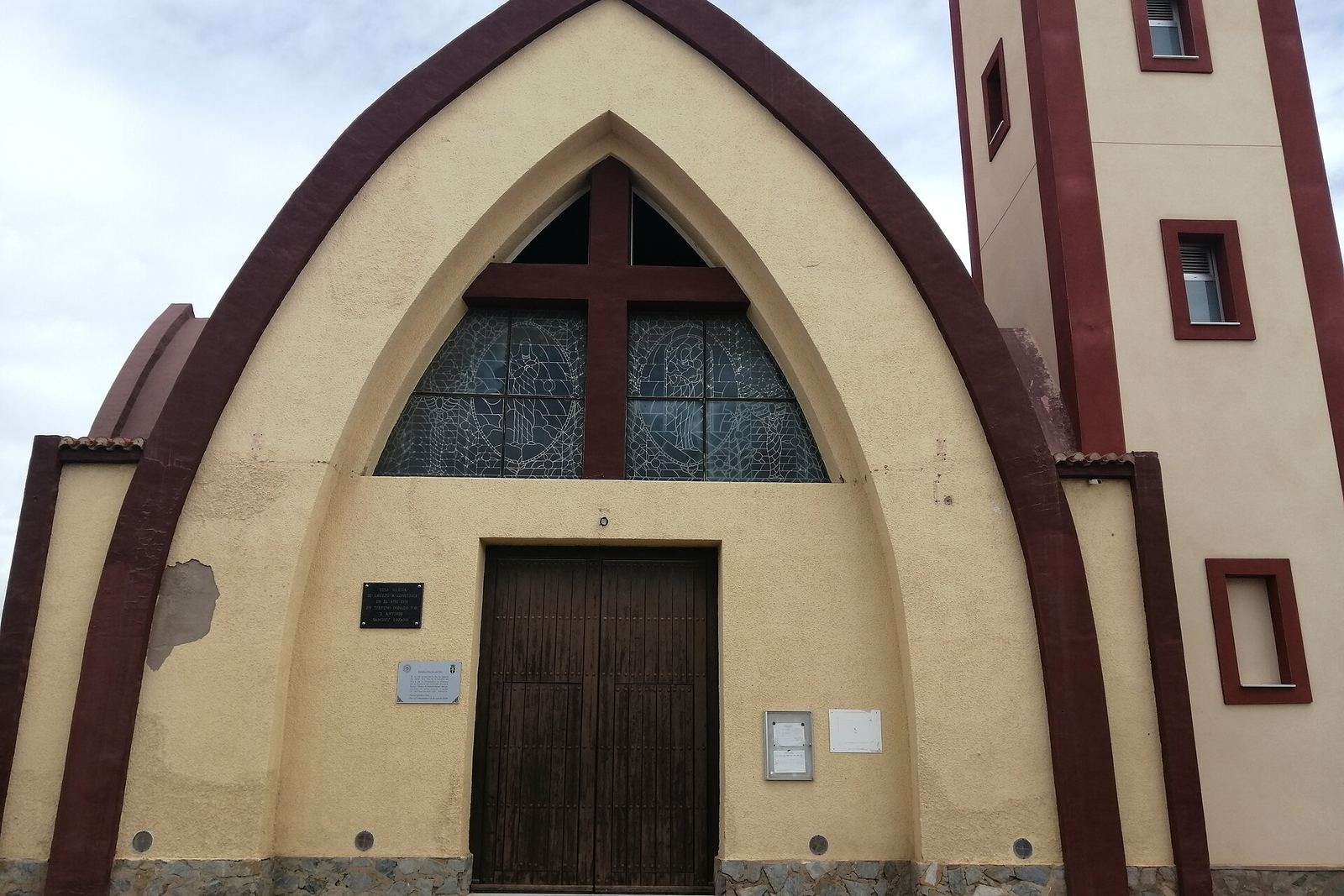
The inland centre (Zona Pueblo) holds the town hall, the schools and the health centre, with around 15,000 residents. There is no old quarter there — and none anywhere else in the municipality either: Pilar only separated from Orihuela in 1986, and even the parish church dates from the 1980s. The architecture is uniformly new and functional.
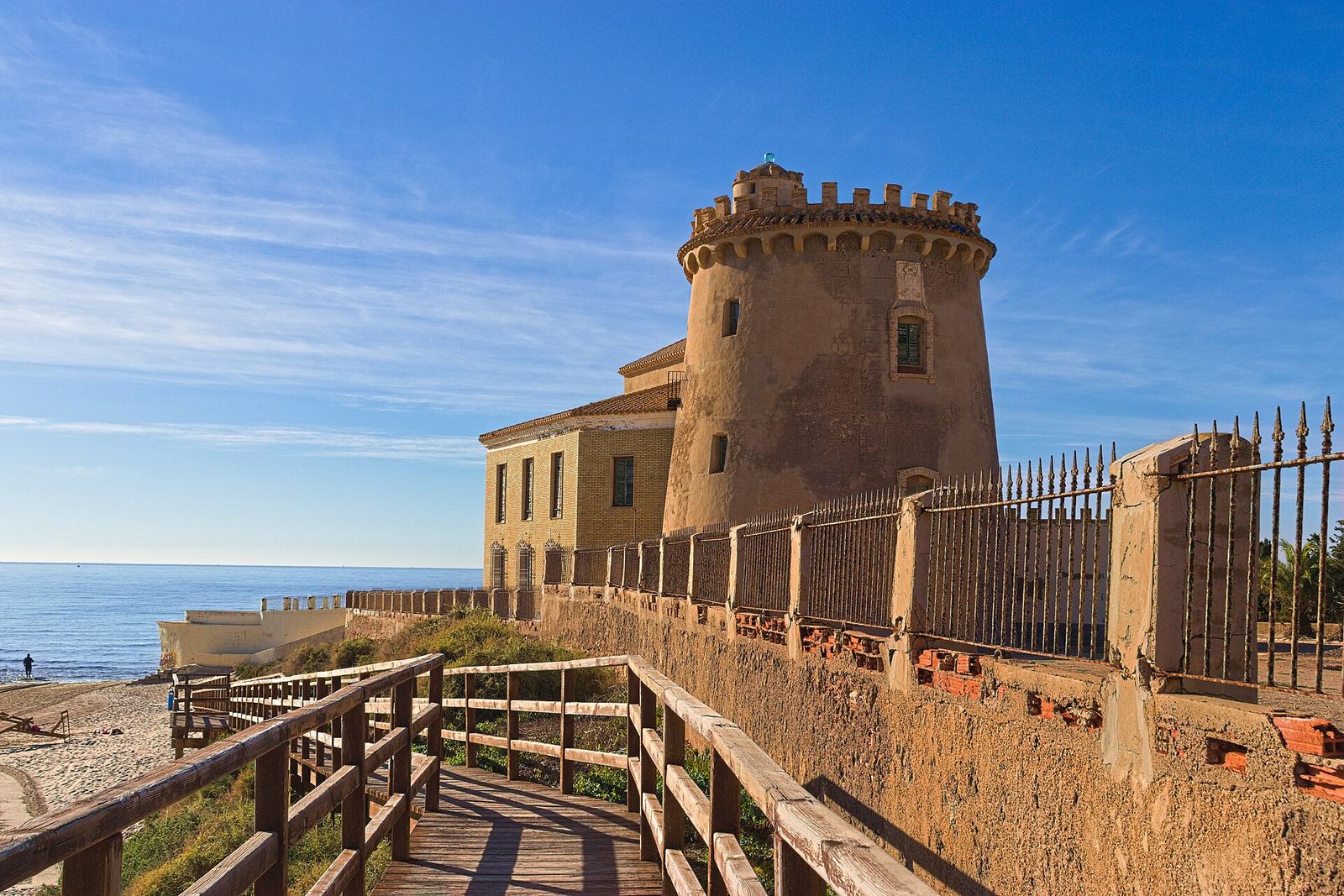
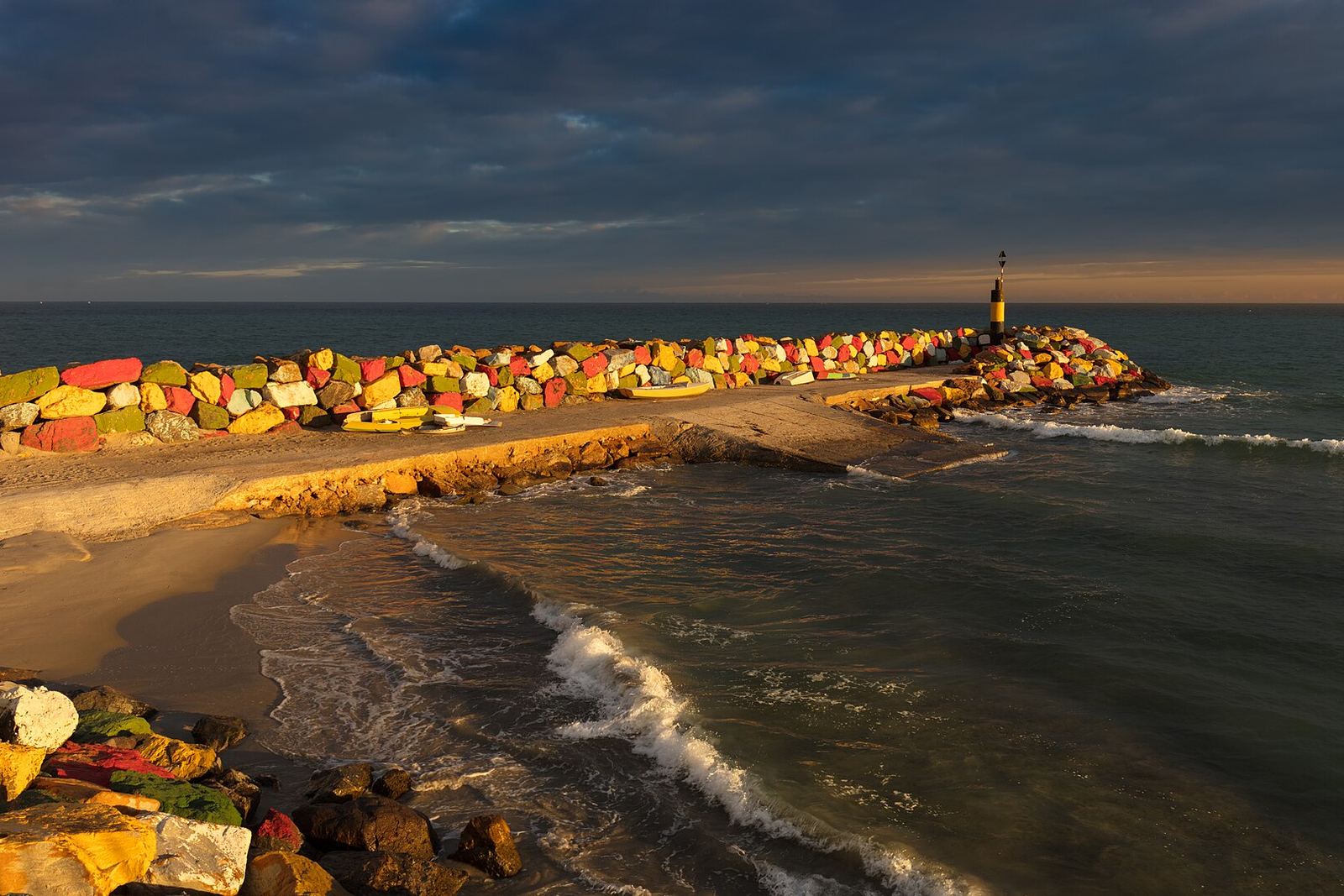
Torre de la Horadada is the coastal settlement, grown around its watchtower of 1591 and a 539-berth marina. Restaurants and shops cluster by the port, and in summer the rhythm here is noticeably more international and more crowded. Mil Palmeras, slightly further north, is smaller and quieter: a palm-lined promenade, one 535-metre Blue Flag beach, no marina of its own and, by local accounts, almost no evening life. Inland among the hills there is also Pinar de Campoverde — larger plots, villas with pools and its own Sunday market.
The whole municipality had 24,316 residents in 2025, up from 23,844 a year earlier. Most of them — about 15,000 — are in the inland centre. Torre de la Horadada has roughly 3,240 registered residents, Mil Palmeras 955 and Pinar de Campoverde 3,480. Torre de la Horadada's population is reported to multiply several times over in summer.
On the 2022 population-register breakdown, 40.8% of residents were born outside Spain — but this is not the usual Northern European retirement picture. The largest group was British (2,762), closely followed by Moroccan (1,957), then Romanian (710) and Ecuadorian (671); Morocco, Romania and Ecuador together outnumber the British group. Behind that are the greenhouses and the flower growing, not the beaches. No more recent nationality breakdown has been published.
Along the coastal strip at Torre de la Horadada and Mil Palmeras, two- and three-bedroom apartments and bungalows dominate, aimed at the holiday-let and retirement markets at once. Inland — in Pinar de Campoverde and around the Lo Romero golf course — the stock gets larger: semi-detached houses and detached villas with pools on bigger plots, alongside a steady supply of building plots. New-build activity continues, and land is a visible segment of the market in its own right here.
On price levels: idealista's review from April 2025 put the average asking price at €2,976 per m². The same portal's price index appears to show around €3,363 by June 2026, a 5.3% year-on-year rise — but that page could not be opened directly, so that figure is an indication rather than a confirmed fact. The direction is up; the size of the move is less certain, because in a municipality this small a portal's average rests on few listings.
The border, and what it costs
To the south the municipality borders the Región de Murcia, and the line is within reach: the El Mojón settlement and beach sit in the municipality's southern corner, while immediately across the boundary, in San Pedro del Pinatar, a settlement and beach of the same name are already in a different autonomous community. For a buyer that is three practical differences.
Transfer tax. In the Valencian Community, which is where all of Pilar de la Horadada sits, ITP on a resale home is currently 9% (reduced from 10% for deeds from 2025), with 6% for buyers under 35 and certain other groups. In Murcia the same tax is 7.75% (reduced from 8% for deeds from 25 July 2025), with reduced rates of 3–4%. On a resale that is real money, but only south of the line.
Holiday letting. In Valencia this runs through the VT register; in Murcia through a separate VV.MU. system, which adds an NRUA entry at the Property Registry, liability insurance of at least €300,000 and 60% owner approval in apartment buildings. A licence from one region has no standing in the other.
Health service. The municipality belongs to the Torrevieja health department and the Valencian system; across the border the Servicio Murciano de Salud operates instead.
Who Pilar de la Horadada suits
Retirees
The terrain is flat, the health centre adds paediatrics, nursing, obstetrics-gynaecology and rehabilitation alongside general practice plus an out-of-hours point, and the town hall runs free transport to Torrevieja hospital. The inland town does not shut down after the season.
Boat owners
The marina at Torre de la Horadada has 539 berths and is run by the Generalitat Valenciana. On site there is a fixed crane, fuel, a 118 m² covered workshop and a 1,120 m² haul-out area; the Punta Horadada headland shelters it.
Holiday-let investors
Six Blue Flag beaches along a little over four kilometres of coast concentrate summer letting demand in Torre de la Horadada and Mil Palmeras. The Valencian VT system is well established, though 2025 added community approval and a national NRU number.
Golfers
Lo Romero is an 18-hole, par-72 course inland on the Orihuela road, designed by Jorge Guillén and opened in 2007 or 2008 — sources disagree on the year. It is about 40 minutes from either airport.
Ask before you settle on an address
Tell us whether you are looking at the coast or inland, and we will go through what is actually different about a specific address — distance to the sea, community rules, the state of the letting licence.
76 km, about 48 minutes by car; more international routes
Región de Murcia airport (RMU, Corvera)
41 km, about 38 minutes by car
Nearest larger town
Torrevieja, 19 km, about 22 minutes
Beaches
Just over 4 km of coastline; six Blue Flag beaches in 2025: Puerto, Higuericas, Jesuitas, Conde, Mil Palmeras and Rocamar
Healthcare
Health centre on Calle Murcia, out-of-hours point 15:00–08:00 Monday to Saturday and 24 hours on Sundays; hospital in Torrevieja, about 19 km
Schools
Five public education centres in the municipality; the nearest international schools are in San Miguel de Salinas and, across the border, San Pedro del Pinatar
Market day
Fridays 08:00–14:00 in the town centre; Sundays in Pinar de Campoverde; in summer, evening markets in Mil Palmeras (Tuesdays) and Torre de la Horadada (Wednesdays)
Marina
Torre de la Horadada, 539 berths, run by the Generalitat Valenciana
Golf
Lo Romero Golf, 18 holes, par 72, at km 29 of the Orihuela road
Roads and rail
The AP-7 and the N-332 both run through the municipality; there is no railway or tram
Property in Pilar de la Horadada
Everything currently available in our feed. The list refreshes nightly.
In Alicante, and in the Valencian Community — all of it, Torre de la Horadada and Mil Palmeras included. The Murcia border runs a kilometre to the south, and the neighbouring town of San Pedro del Pinatar is already in a different autonomous community. In practice that means Valencian transfer tax, Valencian holiday-let rules and the Valencian health service, not Murcia's.
What is the difference between Torre de la Horadada, Mil Palmeras and Pilar de la Horadada itself?
The town hall, the schools, the health centre and the Friday market are all inland, 3–6 km from the sea, in a genuinely agricultural town with no beach. Torre de la Horadada has the 539-berth marina, the watchtower of 1591 and a more international feel. Mil Palmeras is smaller and quieter: a promenade and one 535-metre Blue Flag beach, and no marina of its own.
Does it empty out in winter?
Not the inland centre — the Friday market and the ordinary shops run all year, because agriculture rather than tourism is the base of the local economy. The coastal strip is a different story: Torre de la Horadada's population multiplies several times over in summer and falls back at the end of the season, and some seasonal businesses close.
Can I let my apartment out short-term?
Yes, under the Valencian VT regime, which applies across the whole municipality: a declaración responsable, a municipal compatibility report, entry in the tourism registry and a visible registration number. You let the whole property, not a room, and for up to 10 consecutive days per guest. Since 2025 you may also need community-of-owners approval and a national NRU number to advertise on booking platforms.
How far are the airport and the hospital?
Región de Murcia airport (Corvera, RMU) is about 41 km and 38 minutes away; Alicante-Elche (ALC) is 76 km and about 48 minutes, with more international routes. There is no direct flight from Tallinn to either, so expect a connection. Torrevieja hospital is about 19 km, or 20–25 minutes, and the town hall runs free patient transport there.
Is there an international school nearby?
Not inside the municipality. There are five public, Spanish-curriculum centres here — two infant and primary schools, the IES Thiar secondary school, a music conservatoire and an adult-education centre — plus one private nursery. The nearest international options are in San Miguel de Salinas (El Limonar Villamartín, The O'Brien) and, across the border, San Pedro del Pinatar (New Castelar College).